
Understanding VRF Systems: Benefits for Commercial Properties
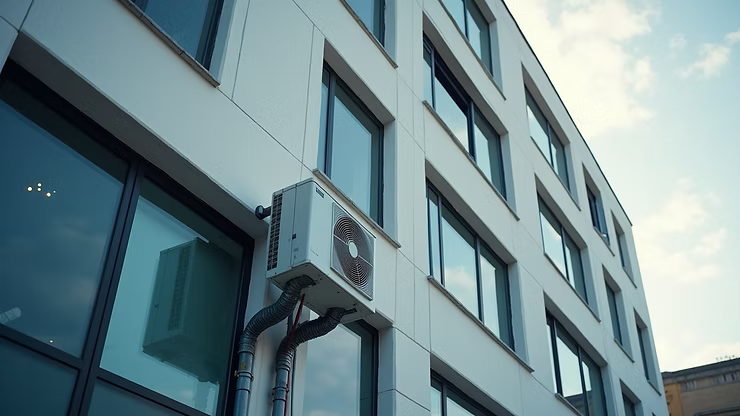
In commercial property management, the pursuit of energy efficiency and occupant comfort never ends. One solution that has gained significant traction in recent years is the Variable Refrigerant Flow (VRF) system — a technology that offers a range of benefits for commercial buildings while also reducing operational costs. Here's a practical look at how VRF works, why it's becoming the preferred choice for many property managers, and what to consider before making the investment.
What is a VRF System?
A Variable Refrigerant Flow (VRF) system is a type of HVAC technology that allows for simultaneous heating and cooling of different areas within a building. Unlike traditional HVAC systems that use a single unit to control the temperature of an entire space, VRF systems use multiple indoor units connected to a single outdoor unit. This setup enables precise temperature control across different zones, making it ideal for commercial properties with diverse heating and cooling needs.
Key components of a VRF system
- Outdoor unit: The heart of the VRF system, responsible for refrigerant flow and heat exchange.
- Indoor units: Wall-mounted, ceiling-mounted, or floor-mounted units that distribute conditioned air throughout the space.
- Refrigerant piping: A network of pipes that connects the outdoor unit to the indoor units, allowing for the transfer of refrigerant.
- Control system: A sophisticated control mechanism that manages the operation of the indoor and outdoor units, ensuring optimal performance.
Benefits of VRF Systems for Commercial Properties
Energy efficiency
One of the most compelling reasons to consider a VRF system is its energy efficiency. Traditional HVAC systems often operate at a fixed capacity, leading to energy waste when demand for heating or cooling fluctuates. VRF systems, in contrast, adjust the flow of refrigerant based on the specific needs of each zone — meaning they can operate at partial loads, significantly reducing energy consumption.
A study conducted by the U.S. Department of Energy found that VRF systems can achieve energy savings of up to 30% compared to conventional systems.
Flexibility and scalability
VRF systems offer unparalleled flexibility in design and installation. They can be adapted to fit various building layouts and scaled up or down based on changing needs — particularly beneficial for commercial properties that may undergo renovations or expansions.
A retail space that expands to include additional square footage can integrate new indoor units into the existing VRF system without the need for extensive new ductwork.
Enhanced comfort
With the ability to control temperatures in individual zones, VRF systems provide a higher level of comfort for occupants. Each area can be set to its preferred temperature, ensuring everyone is satisfied regardless of where they are in the building.
In a multi-tenant office building, different companies can maintain their preferred climate settings without affecting one another.
Quiet operation
VRF systems are designed to operate quietly, making them ideal for environments where noise can be a distraction. The outdoor units are typically installed away from occupied spaces, and the indoor units are engineered for low noise levels.
Reduced installation costs
While the initial investment in a VRF system may be higher than traditional HVAC, overall installation costs can be lower. The absence of extensive ductwork and the use of smaller, more efficient units can lead to significant savings during the installation phase.
Considerations When Choosing a VRF System
Initial investment
While VRF systems can lead to long-term savings, the upfront costs can be a barrier for some property managers. It's essential to conduct a thorough cost-benefit analysis to determine if the investment aligns with your financial goals.
Maintenance requirements
Like any HVAC system, VRF systems require regular maintenance to ensure optimal performance. Property managers should be prepared to establish a maintenance schedule and budget for potential repairs.
Training and expertise
Installing and maintaining VRF systems requires specialized knowledge. Property managers should ensure their HVAC contractor is trained and experienced in VRF technology — the technology is different enough from conventional HVAC that inexperienced installers can miss critical details.
Real-World Applications of VRF Systems
Hospitality industry
Hotels and resorts are increasingly adopting VRF systems to enhance guest comfort and reduce energy costs. With the ability to control temperatures in individual rooms, guests enjoy a personalized experience while the hotel benefits from lower energy bills.
Retail spaces
Retail environments often have varying heating and cooling needs based on occupancy and product displays. VRF systems allow retailers to maintain optimal conditions for both customers and merchandise — leading to improved comfort and, often, measurable effects on sales.
Educational institutions
Schools and universities can benefit from VRF systems by providing comfortable learning environments. Classrooms, libraries, and administrative offices can all be independently controlled, ensuring students and staff remain comfortable throughout the day.
Conclusion
As commercial properties continue to seek ways to improve energy efficiency and occupant comfort, VRF systems stand out as a viable solution. Their ability to provide precise temperature control, reduce energy consumption, and adapt to changing needs makes them an attractive option for property managers. By investing in a VRF system, commercial properties can enhance their operational efficiency while creating a more comfortable environment for everyone involved.
VRF offers a blend of energy efficiency, flexibility, and comfort that's hard to match. If you're considering upgrading your HVAC system, it may be time to explore the benefits of VRF technology.